Microsoft Lost $357 Billion in Market Cap as Stock Plunged Most Since 2020: What Drove the Historic Sell-Off?
Microsoft Lost $357 Billion in Market Cap as Stock Plunged Most Since 2020: What Drove the Historic Sell-Off?
I remember sitting at my desk, watching the after-hours trading screen flicker. It wasn't just a red day; it was an alarming, historic drop. For a company as fundamentally sound and dominant as Microsoft, seeing its valuation shed hundreds of billions of dollars in a single session is a seismic event that few analysts anticipated. This wasn't just a routine market correction; it was a brutal repricing of future expectations that underscores the fragile state of the global economy.
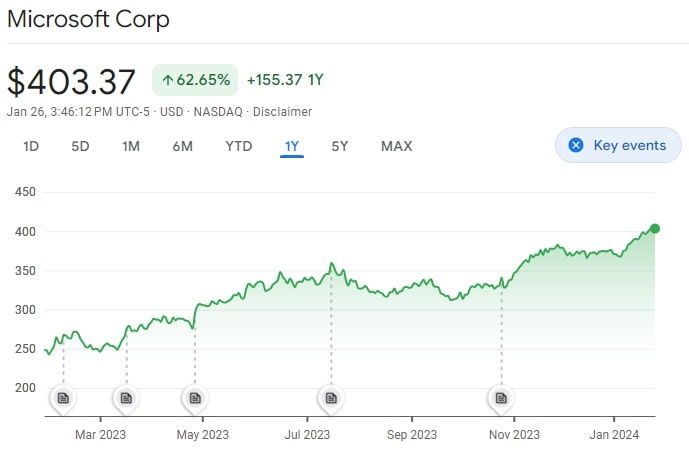
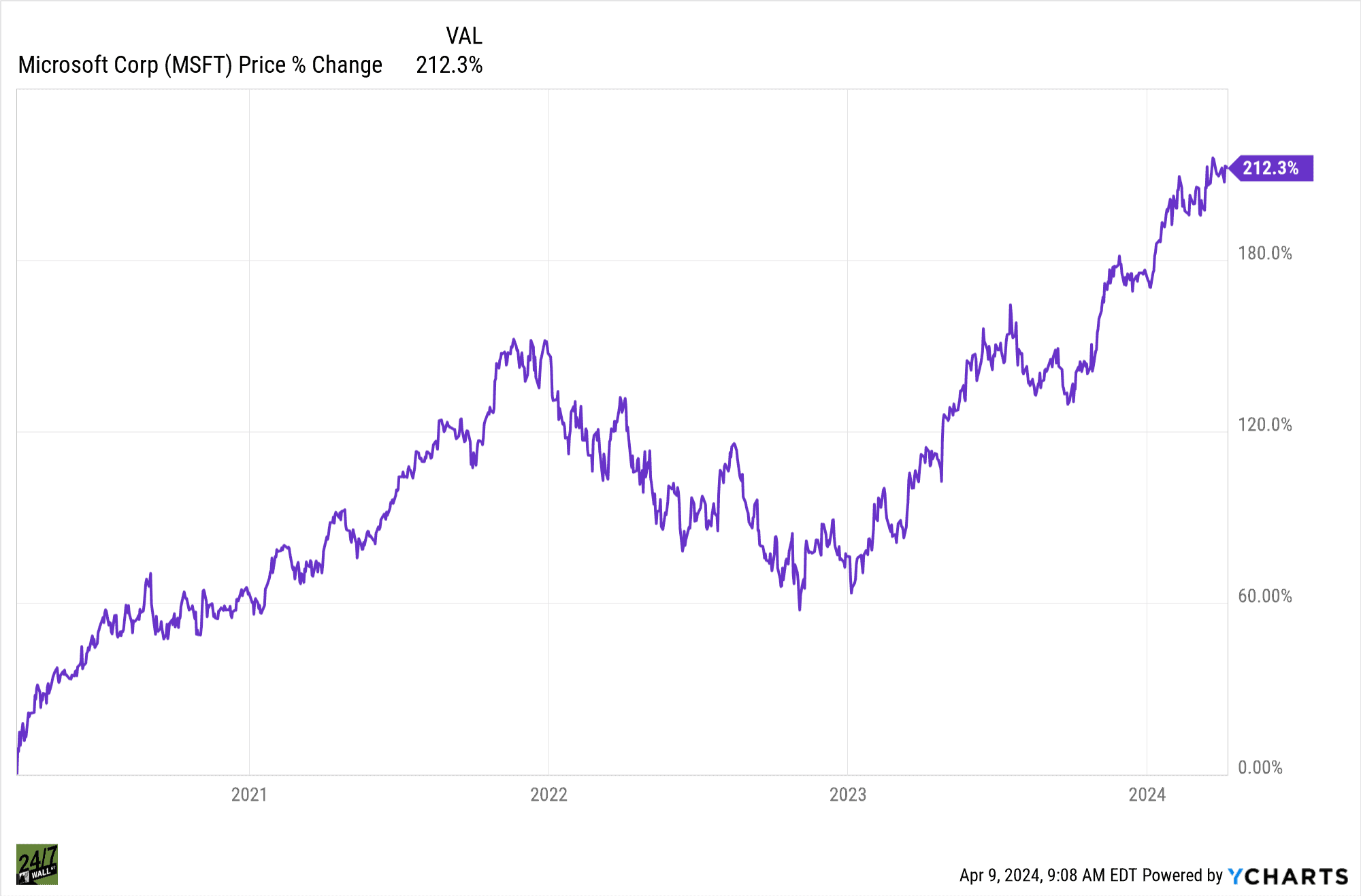
In a shockwave that immediately reverberated across global financial markets, Microsoft (MSFT) witnessed a staggering drop in its market capitalization, wiping out approximately $357 billion in value. This single-day plunge marked the stock’s worst performance since the volatile economic environment of 2020, effectively halting its years-long trajectory of near-uninterrupted ascent and challenging the perception of tech giants as impervious to macro headwinds.
The catalyst for this unprecedented sell-off? A quarterly earnings report that, on the surface, looked relatively strong, yet contained cautious forward guidance. While overall revenue figures often met or slightly exceeded analyst consensus, the devil was squarely in the details—specifically the projected slowing growth for the immensely profitable and vital Azure cloud division.
Institutional investors, already bracing for a potential recessionary environment characterized by tighter corporate spending, sold off shares aggressively. The market reaction signaled profound concern over the slowing pace of enterprise digital transformation spending and the immediate impact of global inflation and rising interest rates on Microsoft’s near-term profitability.
The Anatomy of the Plunge: Macro Headwinds Meet Peak Valuation
The sharp sell-off occurred immediately following the announcement of Microsoft's results for the reporting period (typically Q3 or Q4 results that trigger such an event). The stock plummeted more than 7% post-market, a move that eradicated a market capitalization sum larger than the valuation of many S&P 500 companies combined. This reaction was not solely based on Microsoft’s internal performance; it was the inevitable culmination of mounting macroeconomic pressures that have been throttling the entire technology sector.
Wall Street had been deeply nervous for months. Aggressive interest rate hikes initiated by the Federal Reserve, designed to combat persistent inflation, made growth stocks inherently less attractive. Higher rates diminish the present value of projected future earnings, hitting high-growth tech companies like Microsoft particularly hard.
Furthermore, the persistent strength of the US dollar continued to suppress international revenue figures. As a multinational behemoth generating substantial income overseas, Microsoft suffered significantly when converting foreign sales back into weaker dollars, directly impacting its reported earnings per share.
Market experts widely pointed out that the $357 billion loss was a function of dual anxieties: internal caution from management and pervasive external pessimism from investors. Microsoft had been priced for sustained, exponential growth. When CEO Satya Nadella and his team indicated a necessary deceleration in certain segments, the resulting overreaction was dramatic and immediate.
- Interest Rate Aggression: Rapid increases in the cost of borrowing led to a broad market shift away from risk and future growth prospects.
- Currency Translation Losses: The strong US dollar created significant headwinds, reducing reported foreign revenue.
- Economic Slowdown Signals: Corporations signaled across the board that large-scale IT spending, essential for Microsoft’s enterprise software and services, would be curtailed.
- The Tech Correction: The plunge affirmed the ongoing market sentiment that the valuations achieved during the pandemic tech boom were unsustainable in a tightening fiscal environment.
This massive reduction in market capitalization served as a stark, painful reminder that even the most powerful, cash-generating enterprises are not immune to the cyclical nature of macroeconomic forces. The scale of the loss confirmed that a deep tech correction was underway, with no company too big to fail the market’s high expectations.
Dissecting the Earnings Report: The Azure Growth Scare
The "Intelligent Cloud" segment, which encapsulates the flagship Azure platform and server products, has been the undisputed primary growth engine for Microsoft for half a decade. Under Satya Nadella’s leadership, Azure successfully established itself as the leading competitor to Amazon Web Services (AWS). Crucially, this latest earnings report revealed clear cracks in the foundation of that rapid expansion story.
While the Intelligent Cloud revenue stream still showed impressive year-over-year growth, the single most critical metric—the growth rate itself—was noticeably slowing down. Management’s guidance for the subsequent fiscal quarter projected further deceleration, signaling a trajectory that fell far short of the market’s lofty forecasts. This specific deceleration was the principal trigger that panicked institutional investors, leading to massive liquidation.
The slowing growth in Azure consumption was not entirely arbitrary. Corporate clients who aggressively shifted their operations wholesale to the cloud during the height of the COVID-19 pandemic were now entering a mandatory "optimization" phase. Instead of launching new projects, companies were prioritizing cost-efficiency, slowing down new workload migrations, and actively tuning their current cloud usage to save money. This directly resulted in less immediate consumption of high-margin Azure resources.
The earnings call detailed several specific operational pain points that contributed to the less-than-stellar outlook:
- Increased Optimization Efforts: Enterprise clients actively reduced unnecessary cloud usage, lowering monthly recurring revenue for Azure.
- Delay in Large Enterprise Agreements: Massive, lucrative, multi-year contracts that typically provide stability were delayed as global companies paused significant capital expenditures.
- Weakness in Peripherals and PC Sales: The Personal Computing division, encompassing Windows licenses and Surface devices, also registered a significant drop, reflecting a global slump in hardware demand post-pandemic.
- Slight Margin Pressure: Increased competition and the need to retain optimizing customers placed pressure on overall cloud operating margins.
Satya Nadella addressed the mounting concerns during the call, attempting to provide reassurance by emphasizing Microsoft's long-term resilience and its strategic focus on innovative technologies like generative AI and collaboration tools such as Teams. However, the undeniably cautious tone adopted by the Chief Financial Officer regarding future guidance was interpreted by the market as confirmation of a difficult road ahead, cementing the justification for the substantial sell-off.
The guidance revision for the upcoming quarter was particularly harmful. Lowering expectations, even slightly, signals to the market that internal management is anticipating profound business headwinds, prompting high-frequency traders and hedge funds to instantly liquidate large positions to mitigate exposure to perceived risk.
The Wider Repercussions and Shareholders' Path to Recovery
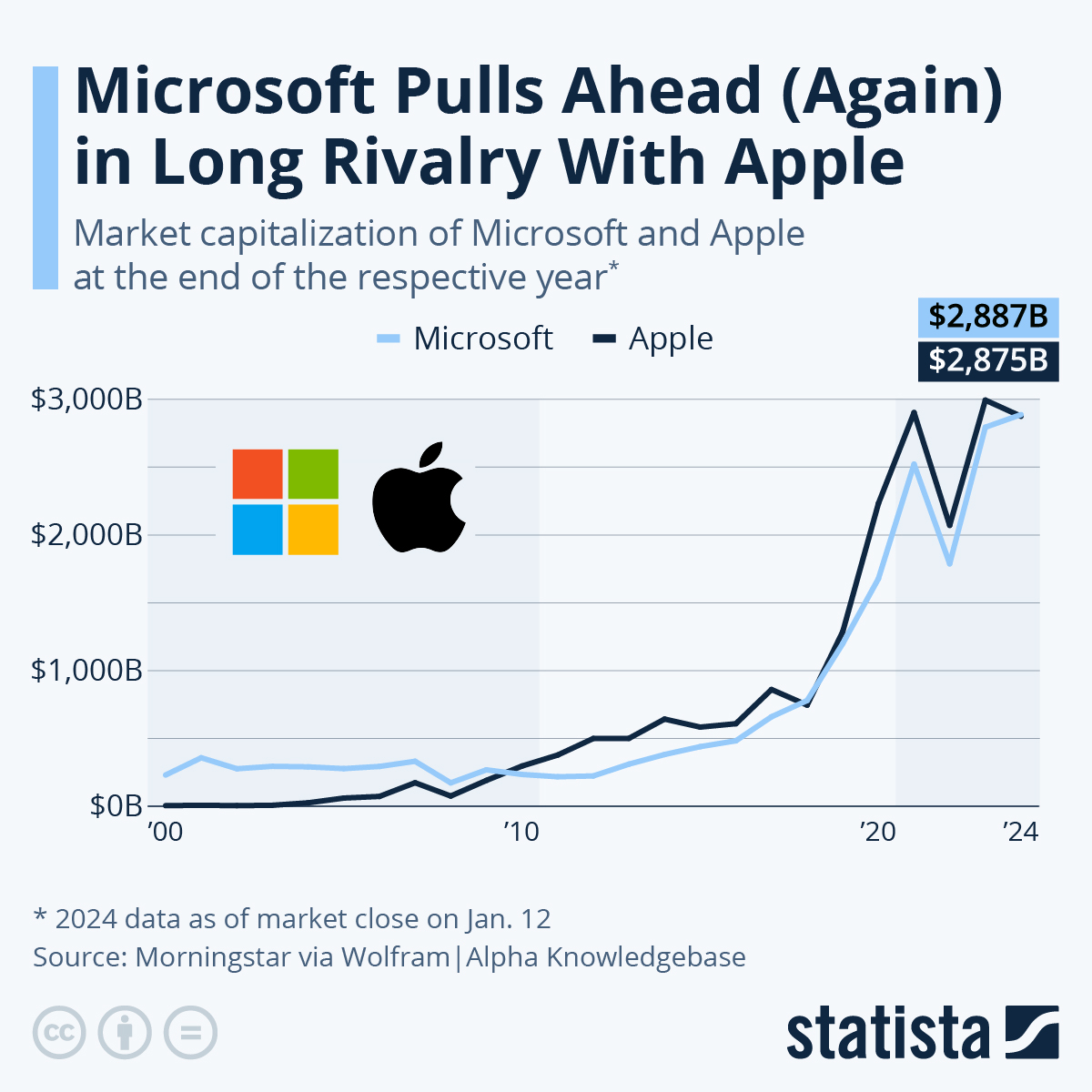
The sheer magnitude of the $357 billion market cap loss had an immediate and palpable chilling effect on the entire technology sector. The Microsoft event contributed substantially to the NASDAQ composite index recording one of its worst weekly performances of the year. Investors immediately intensified their scrutiny of rival tech giants—including Apple, Alphabet (Google), and Amazon—with renewed skepticism regarding the stability of their own cloud revenue streams (AWS and Google Cloud Platform) and forward-looking growth forecasts.
Microsoft’s severe drop was therefore not an isolated incident; it was the clearest symptom yet of the deep uncertainty surrounding global enterprise technology spending. Yet, analysts are quick to distinguish Microsoft from smaller, more vulnerable tech firms. Microsoft possesses an immense, fortress-like cash reserve and operates in highly diversified markets, providing a significant safety cushion that many competitors lack.
For long-term shareholders, the overarching question remains whether this historical plunge represents a fundamental, structural flaw in Microsoft’s core business model or merely a temporary, yet dramatic, cyclical dip. The majority of veteran Wall Street analysts lean heavily toward the latter, viewing the stock as momentarily oversold and undervalued.
The path toward restoring investor confidence and fully recovering the lost market capitalization hinges critically on several strategic moves over the next 18 months:
- Strategic Investment Discipline: Implementing careful efficiency measures and selective hiring freezes to protect robust operating margins against slower revenue growth.
- Maintaining Azure Market Share: Proving that despite global optimization efforts, Azure can continue to capture market share from competitors and grow the overall cloud ecosystem.
- Innovation and Integration: Aggressively leveraging groundbreaking advancements in AI, particularly partnerships like the one with OpenAI, to integrate these transformative technologies across the entire suite of Microsoft products.
- Completing Key Acquisitions: Successfully integrating major acquisition targets (like Activision Blizzard, if relevant to the timeframe) to open lucrative new revenue streams outside of core enterprise software.
Despite the stunning scale of the loss, the fundamental consensus among key investment banks remains robustly positive regarding Microsoft's long-term enterprise value. They maintain that the company is an essential infrastructure provider, a utility for modern business, not a discretionary luxury. The massive shift in market cap merely brings the valuation back to a more sustainable, historically grounded level after years of feverish, pandemic-fuelled growth.
The immediate period following the record plunge will inevitably be characterized by extreme volatility and careful monitoring. Investors worldwide will be hanging onto every statement and managerial forecast coming out of Redmond, seeking definitive signs that stabilization efforts are taking hold and that Azure’s critical high-growth trajectory can be effectively reignited. The $357 billion market cap loss serves as a potent, immediate reminder: even technological titans must contend with gravity and reality when the global economy enters a phase of severe contraction.
The ball is now firmly in Satya Nadella’s court. His leadership in the coming quarters will define whether this historic drop is viewed as a minor hiccup on the road to trillion-dollar stability, or the moment the bull run definitively ended.
Microsoft lost $357 billion in market cap as stock plunged most since 2020
Microsoft lost $357 billion in market cap as stock plunged most since 2020 Wallpapers
Collection of microsoft lost $357 billion in market cap as stock plunged most since 2020 wallpapers for your desktop and mobile devices.
Gorgeous Microsoft Lost $357 Billion In Market Cap As Stock Plunged Most Since 2020 Abstract Collection
Find inspiration with this unique microsoft lost $357 billion in market cap as stock plunged most since 2020 illustration, crafted to provide a fresh look for your background.
Beautiful Microsoft Lost $357 Billion In Market Cap As Stock Plunged Most Since 2020 Artwork for Mobile
Explore this high-quality microsoft lost $357 billion in market cap as stock plunged most since 2020 image, perfect for enhancing your desktop or mobile wallpaper.

Exquisite Microsoft Lost $357 Billion In Market Cap As Stock Plunged Most Since 2020 Scene Photography
Immerse yourself in the stunning details of this beautiful microsoft lost $357 billion in market cap as stock plunged most since 2020 wallpaper, designed for a captivating visual experience.
Crisp Microsoft Lost $357 Billion In Market Cap As Stock Plunged Most Since 2020 Moment for Mobile
This gorgeous microsoft lost $357 billion in market cap as stock plunged most since 2020 photo offers a breathtaking view, making it a perfect choice for your next wallpaper.

Vivid Microsoft Lost $357 Billion In Market Cap As Stock Plunged Most Since 2020 Abstract Art
Experience the crisp clarity of this stunning microsoft lost $357 billion in market cap as stock plunged most since 2020 image, available in high resolution for all your screens.
High-Quality Microsoft Lost $357 Billion In Market Cap As Stock Plunged Most Since 2020 Image for Your Screen
Explore this high-quality microsoft lost $357 billion in market cap as stock plunged most since 2020 image, perfect for enhancing your desktop or mobile wallpaper.
Exquisite Microsoft Lost $357 Billion In Market Cap As Stock Plunged Most Since 2020 Picture for Mobile
Find inspiration with this unique microsoft lost $357 billion in market cap as stock plunged most since 2020 illustration, crafted to provide a fresh look for your background.

Exquisite Microsoft Lost $357 Billion In Market Cap As Stock Plunged Most Since 2020 Scene Concept
A captivating microsoft lost $357 billion in market cap as stock plunged most since 2020 scene that brings tranquility and beauty to any device.

Vivid Microsoft Lost $357 Billion In Market Cap As Stock Plunged Most Since 2020 Photo for Your Screen
Transform your screen with this vivid microsoft lost $357 billion in market cap as stock plunged most since 2020 artwork, a true masterpiece of digital design.

Captivating Microsoft Lost $357 Billion In Market Cap As Stock Plunged Most Since 2020 Image Art
This gorgeous microsoft lost $357 billion in market cap as stock plunged most since 2020 photo offers a breathtaking view, making it a perfect choice for your next wallpaper.
Mesmerizing Microsoft Lost $357 Billion In Market Cap As Stock Plunged Most Since 2020 View Nature
Transform your screen with this vivid microsoft lost $357 billion in market cap as stock plunged most since 2020 artwork, a true masterpiece of digital design.
Spectacular Microsoft Lost $357 Billion In Market Cap As Stock Plunged Most Since 2020 Capture Photography
Immerse yourself in the stunning details of this beautiful microsoft lost $357 billion in market cap as stock plunged most since 2020 wallpaper, designed for a captivating visual experience.

Dynamic Microsoft Lost $357 Billion In Market Cap As Stock Plunged Most Since 2020 Design Nature
A captivating microsoft lost $357 billion in market cap as stock plunged most since 2020 scene that brings tranquility and beauty to any device.
Vibrant Microsoft Lost $357 Billion In Market Cap As Stock Plunged Most Since 2020 Photo Art
Explore this high-quality microsoft lost $357 billion in market cap as stock plunged most since 2020 image, perfect for enhancing your desktop or mobile wallpaper.
Captivating Microsoft Lost $357 Billion In Market Cap As Stock Plunged Most Since 2020 Design for Mobile
A captivating microsoft lost $357 billion in market cap as stock plunged most since 2020 scene that brings tranquility and beauty to any device.

Stunning Microsoft Lost $357 Billion In Market Cap As Stock Plunged Most Since 2020 Image for Your Screen
This gorgeous microsoft lost $357 billion in market cap as stock plunged most since 2020 photo offers a breathtaking view, making it a perfect choice for your next wallpaper.
:format(webp)/cdn.vox-cdn.com/uploads/chorus_asset/file/16189668/bHvaS0k.png "Exquisite Microsoft Lost $357 Billion In Market Cap As Stock Plunged Most Since 2020 Picture in 4K")
Exquisite Microsoft Lost $357 Billion In Market Cap As Stock Plunged Most Since 2020 Picture in 4K
Find inspiration with this unique microsoft lost $357 billion in market cap as stock plunged most since 2020 illustration, crafted to provide a fresh look for your background.

Dynamic Microsoft Lost $357 Billion In Market Cap As Stock Plunged Most Since 2020 Artwork Photography
Immerse yourself in the stunning details of this beautiful microsoft lost $357 billion in market cap as stock plunged most since 2020 wallpaper, designed for a captivating visual experience.

High-Quality Microsoft Lost $357 Billion In Market Cap As Stock Plunged Most Since 2020 Abstract Photography
Discover an amazing microsoft lost $357 billion in market cap as stock plunged most since 2020 background image, ideal for personalizing your devices with vibrant colors and intricate designs.
Amazing Microsoft Lost $357 Billion In Market Cap As Stock Plunged Most Since 2020 Artwork Collection
Experience the crisp clarity of this stunning microsoft lost $357 billion in market cap as stock plunged most since 2020 image, available in high resolution for all your screens.
Download these microsoft lost $357 billion in market cap as stock plunged most since 2020 wallpapers for free and use them on your desktop or mobile devices.